
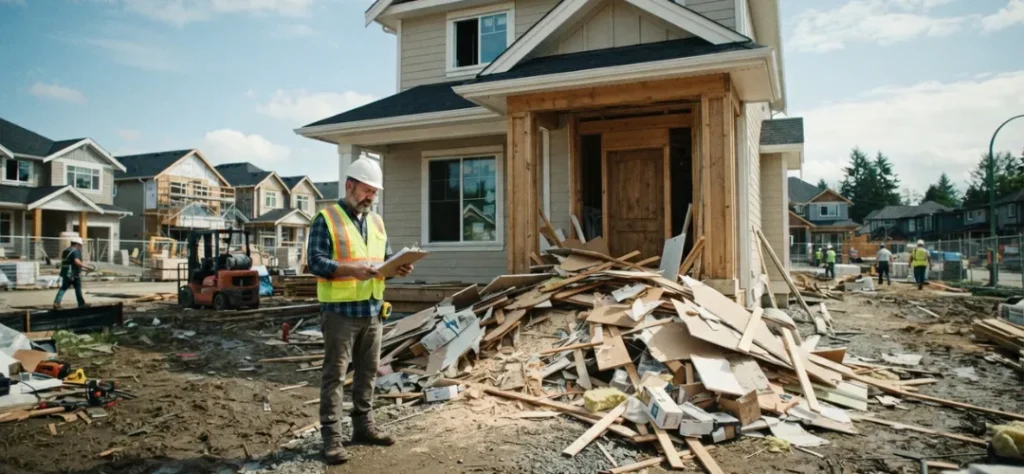
The project is finally done. The paint is dry, the fixtures are in, and you’ve got the inspector booked for Thursday morning. Then you walk the site and spot it: piles of scrap drywall in the corner, a stack of leftover lumber by the back door, and enough dust to write your name on every windowsill.
That mess isn’t just an eyesore. It can stop your inspection cold and push your closeout weeks down the road.
Most people assume inspectors only care about wiring, plumbing, and structure. They care about those, sure. But a cluttered, filthy site sends a signal that corners were cut, and that signal alone can cost you. This blog breaks down exactly why leftover mess is a real cause of delay in construction projects, what inspectors actually look for, and how to keep your timeline intact.
The Mess Nobody Plans For
Every crew plans the build. Almost nobody plans the cleanup. And that gap is where timelines quietly fall apart.
Think about how a project ends. The trades finish in a rush, everyone’s eager to move to the next job, and the waste just sort of… accumulates. Offcuts, packaging, broken tiles, empty buckets, coffee cups. It piles up because it’s nobody’s specific job to haul it away.
The trouble is that a clean site isn’t optional at the finish line. When people ask what can delay a construction project, they usually picture permit hold ups or supply shortages. Debris rarely makes the list, yet it’s one of the most avoidable stumbles out there. You can’t control a backordered HVAC unit, but you can absolutely control whether the floors are clear when the inspector arrives.
That’s the frustrating part. This is a preventable problem hiding in plain sight.
Can Construction Debris Actually Fail an Inspection?
Let’s answer the question directly, because it’s the one keeping project managers up at night.
Can construction debris cause a final inspection to fail? Yes, it absolutely can. An inspector can’t sign off on what they can’t see or safely reach. If a pile of scrap blocks an electrical panel, a service shutoff, or an egress route, that’s an automatic problem regardless of how good the work behind it is.
So does construction debris affect building inspections? More than most people realize. It works in two ways:
- Direct access issues. Blocked panels, covered outlets, obstructed exits, and buried cleanouts all stop an inspector from verifying the work.
- Perception issues. A site drowning in trash tells the inspector that attention to detail was low, so they dig deeper and scrutinize everything harder.
The mess doesn’t just sit there. It changes how the entire visit goes.
What Inspectors Are Really Checking
To understand why debris matters, you need to know what’s going through an inspector’s head as they walk the property.
So what do inspectors look for during a final inspection? They’re confirming the building is safe, code compliant, and ready for people to occupy. That means verifying:
- Electrical panels, outlets, and wiring are accessible and correct
- Plumbing fixtures, shutoffs, and cleanouts work and are reachable
- Exits, hallways, and stairwells are clear and unobstructed
- Smoke and carbon monoxide detectors are installed and functional
- Fire rated assemblies and safety systems are intact
Notice a pattern? Nearly every item requires clear access. When debris blocks a panel or clutter hides a detector, the inspector can’t tick that box. And an item they can’t verify becomes an item that fails.
A tidy space during the final building inspection does something subtle too. It builds trust. When an inspector sees a clean, organized site, they read it as a sign the whole job was done with care, and the visit tends to go smoother.
How Leftover Debris Turns Into Code Problems
Here’s where a simple mess becomes something more serious than a bad first impression.
Piles of waste can create actual building code violations on the spot. Combustible scrap stacked near electrical equipment, blocked fire exits, obstructed extinguishers, and covered access panels all violate safety codes directly. The inspector isn’t being picky. They’re following rules written to keep people alive.
This is why debris ranks among the underrated delay causes in construction projects. A blocked egress path isn’t a housekeeping note. It’s a failed inspection that requires a re-inspection, a new appointment, and days or weeks of waiting for the next available slot.
And when the visit goes badly, it lands in writing. A construction delay report documenting a failed final due to site conditions follows the project around, affecting schedules, budgets, and sometimes your reputation with the client. All because nobody hauled off the trash.
The Real Cost of Skipping Cleanup
So what happens if a construction site isn’t cleaned before inspection? The short version: you lose time, money, and momentum, often all at once.
Let’s put the dominoes in order. The inspector shows up, can’t access what they need, and fails the inspection. Now you’re rescheduling, and inspectors are booked out. That delay stalls the certificate of occupancy, which stalls move-in, which stalls the final payment. Meanwhile, your crew may have already scattered to other jobs, so pulling them back for cleanup costs even more.
Here’s how the difference plays out:
With proper cleanup | Without cleanup |
Inspector accesses everything easily | Blocked panels and exits fail the visit |
Passes on the first try | Requires costly re-inspection |
Certificate issued on schedule | Occupancy and payment delayed weeks |
Client sees a professional finish | Client sees a messy, incomplete site |
One column keeps your project on track. The other quietly drains your budget. The choice is that simple.
Where Debris Fits Among Common Project Delays
It helps to zoom out and see how cleanup stacks up against the usual suspects.
Ask any veteran builder what are the most common reasons for delays in construction projects? and you’ll hear a familiar list: permit issues, weather, labor shortages, material delays, and design changes. All real.
But here’s what separates debris from that pack. Most of those delays involve forces outside your control. You can’t summon rain to stop or make a supplier ship faster. Cleanup, on the other hand, is entirely in your hands. It’s one of the few timeline risks you can eliminate completely with a little planning.
That’s exactly why leaving it to chance stings so much. When a project slips because of something you could have prevented in an afternoon, that’s a tough conversation to have with a client. Proper construction site cleanup removes that risk from the board entirely.
What Proper Post-Construction Cleanup Actually Involves
Cleanup is more than a quick sweep and a wave goodbye. Done right, it’s a thorough process that leaves the space genuinely inspection ready.
So what is included in post-construction cleanup? A complete job usually covers:
- Removing all leftover materials, packaging, and scrap
- Clearing access to panels, shutoffs, outlets, and cleanouts
- Detail dusting surfaces, fixtures, vents, and window tracks
- Cleaning floors of adhesive, paint, and construction dust
- Wiping down walls, trim, and glass for a finished look
- Ensuring every exit and walkway is completely clear
Good post-construction cleanup happens in phases, not one frantic push at the end. A rough clean after the heavy trades leave, then a final detailed pass right before inspection, keeps the site manageable the whole way through.
Handling the Waste the Right Way
Clearing the site is only half the job. Where all that material goes matters just as much.
Ever wonder what happens to construction debris? It shouldn’t all end up in a landfill. Concrete, metal, wood, and cardboard can often be recycled or repurposed, while hazardous materials require special handling. Responsible construction waste disposal follows local regulations and sorts materials properly rather than dumping everything into one bin.
Effective construction debris removal and thorough construction waste removal cover the heavy lifting: hauling off drywall scraps, broken fixtures, pallets, and bulk material that a broom simply can’t touch. This is the muscle work that clears the way for a clean final pass.
Getting this right protects you on two fronts. You stay compliant with disposal rules, and you avoid the fines and liability that come from mishandled waste. It’s good practice and good business at the same time.
Why Hiring Help Often Pays for Itself
You could assign cleanup to your crew. But should you? Often, the smarter move is bringing in specialists who do this every day.
Your tradespeople are skilled at building, not hauling. Every hour they spend dragging scrap to a dumpster is an hour of skilled labor spent on unskilled work, and that’s expensive. Professional junk removal teams show up with the trucks, the crew, and the disposal know-how to clear a site fast.
A dedicated junk removal company brings a few clear advantages:
- Speed, so your timeline stays intact
- Proper sorting and compliant disposal
- Heavy hauling your crew isn’t equipped for
- One less thing on your plate during the crunch
Booking junk removal services ahead of your inspection date means the site is clear, accessible, and inspection ready without pulling your builders off finish work. For most projects, that peace of mind more than justifies the cost.
Clean Site, Clear Path
Here’s what all of this really adds up to. Debris isn’t a minor housekeeping detail at the end of a build. It’s a genuine threat to your inspection, your timeline, and your budget, and it’s one of the few risks you can wipe out entirely with a bit of planning.
So before your next final approaches, ask yourself one question: is the site truly ready to be seen?
If you’d rather not gamble your timeline on last-minute cleanup, we can help. At Ej Haul LLC, we provide professional construction debris removal Services that leave your site spotless and inspection ready, every time. Call us at 1 855 722 5535 or visit https://ejhaul86.com/construction-debris-removal-services/ to schedule your cleanup and keep your project moving.
Frequently Asked Questions
- Can construction debris delay a final inspection?
Yes. Debris that blocks access to electrical panels, plumbing shutoffs, exits, or other key areas can prevent an inspector from completing the inspection and may result in a failed or delayed approval.
- What should be removed before a final building inspection?
All construction debris, leftover materials, packaging, tools, and equipment should be removed. Walkways, exits, utility panels, and inspection points should also be completely accessible.
- Does construction debris need to be disposed of professionally?
While not always required, professional construction debris removal ensures waste is disposed of safely, efficiently, and in accordance with local regulations, especially for large or mixed-material projects.
- When should construction debris be removed?
Ideally, debris should be removed throughout the project, with a final cleanup completed before the scheduled building inspection to avoid unnecessary delays.
- What happens if a property fails its final inspection due to debris?
The inspection typically must be rescheduled after the site has been cleaned, which can delay the certificate of occupancy, project completion, and final payments.