
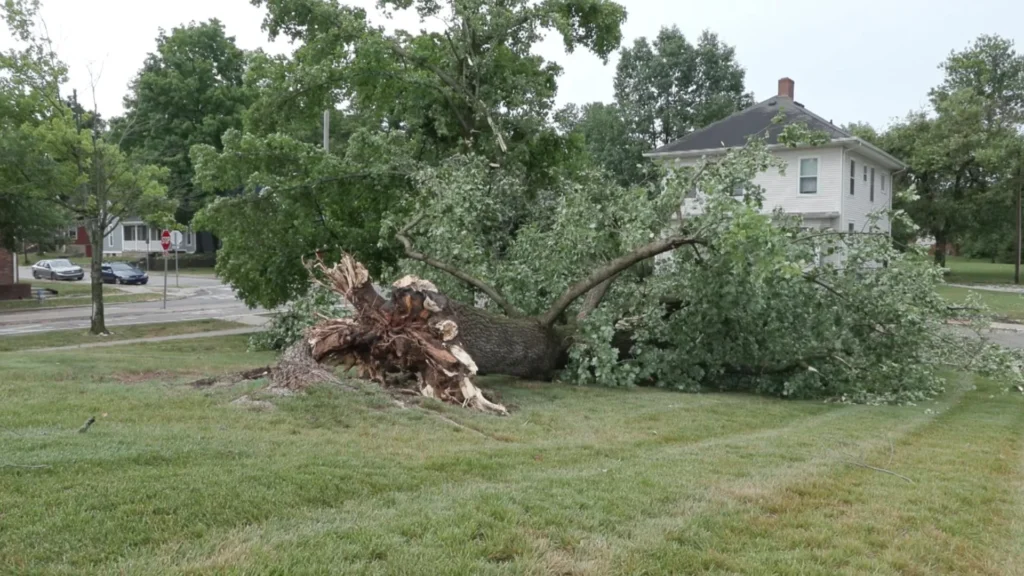
Downed tree limb removal services are the last thing on your mind until a storm drops half a maple across your driveway. One night you’re listening to wind and rain. The next morning your yard looks like a lumberyard exploded.
Your first instinct is probably to grab gloves and start dragging branches to the curb. Hold off for a minute. Storm-damaged wood behaves differently than healthy wood, and what you do in the first hour after spotting the damage can protect your safety, your home, and your insurance claim.
This guide walks you through exactly what to do before you touch a single branch, how to tell a quick DIY cleanup from a job for the pros, and what affects the price of professional storm debris removal.
What to Do When Tree Limbs Fall After a Storm
Here is the short version. Before cleanup, you should:
- Stay back and look for hazards
- Check for downed power lines
- Make sure everyone is accounted for
- Photograph the damage
- Inspect your home, car, fence, and roof
- Decide if the job is DIY-safe
- Call a professional and plan the haul-away
Each step matters, and the order matters too. Let’s go through them one at a time.
Step 1: Stay Back and Look for Hazards
Walk outside, but keep your distance. Look at the fallen limb, then look up. Are there other branches still hanging in the tree? Arborists call these “hangers” or “widowmakers” because a partly broken limb can drop without warning, even when there is no wind.
Also check the ground. Wet soil after heavy rain can be soft, and a leaning tree may be one gust away from falling. If the trunk is cracked, split, or tilting, keep everyone away from that area until an expert looks at it.
Step 2: Check for Downed Power Lines
This is the step that cannot wait. If a limb is touching or resting near a utility line, treat the line as live. Electricity can travel through wet branches, wet grass, and even standing water around the tree.
Stay at least several car lengths away, keep kids and pets back, and call your utility company or emergency services. Do not try to move the limb with a rake, a broom, or a ladder. Anything that touches that branch can become part of the circuit.
This is also the point where emergency tree removal becomes a safety issue, not a convenience. A limb on a power line is never a DIY project.
Step 3: Make Sure Everyone Is Safe and Accounted For
It sounds obvious, but storms are chaotic. Check on family members, and check on neighbors if you can do so safely, especially older neighbors who may not be able to move debris or call for help.
If anyone was hurt by falling branches, call emergency services first. Cleanup can wait. Wood does not go anywhere.
Step 4: Document the Storm Damage Before You Move Anything
This is the step most homeowners skip, and it can cost them later. Before you drag a single limb, take photos and short videos from several angles. Capture the fallen limb, the area it landed on, and any damage to your property.
Get wide shots and close-ups. If a branch dented your car or crushed part of a fence, photograph the damage next to something that shows scale, like a tape measure or a boot.
Why does this matter? Your homeowners insurance company may ask for proof of the damage and when it happened. Photos taken before cleanup are much stronger evidence than photos of a neat pile at the curb. Coverage for tree debris varies by policy, so read your policy or call your agent to ask what applies to you. Keep any receipts for cleanup, too.
Step 5: Inspect Your Home, Roof, Gutters, and Vehicles
Now look at what the limb may have hit. A tree limb on a roof can crack shingles, bend flashing, or puncture decking. Limbs can pull down gutters, knock out window screens, damage siding, and break fences.
Check from the ground first. You do not need to climb on a wet, debris-covered roof to know there is a problem. Look for sagging areas, missing shingles, or water stains on the ceiling inside.
If a limb has damaged the roof, cover the area with a tarp if you can do it safely, or call a roofer. Many insurers expect you to prevent further damage once you know about it.
Here is a quick way to think about it:
- Limb on the ground only: Likely manageable, if no other hazards are present.
- Limb on a fence, shed, or car: Photograph first, then consider help moving it.
- Limb on the roof or against the house: Call a professional.
- Limb near or on power lines: Call the utility company and stay away.
Step 6: Decide Whether Fallen Tree Limb Cleanup Is a DIY Job
Some storm cleanup really is a weekend project. If a few small branches landed in your yard, you can usually handle them yourself with the right gear.
A good rule of thumb: if the limb is smaller than your forearm, is fully on the ground, and nothing is tangled, stuck, or under tension, DIY may be reasonable. Wear gloves, safety glasses, sturdy boots, and long sleeves. Use a hand saw or loppers rather than a chainsaw if you have little experience.
But be honest with yourself. A fallen limb can hold hidden tension, especially if it’s wedged against the ground or another branch. When you cut it, it can spring back or roll toward you. That is how a simple cleanup turns into an emergency room visit.
Call for help if any of these are true:
- The limb is thick, heavy, or longer than you can safely lift
- It is hung up in the tree or leaning on another limb
- It is on the roof, a vehicle, or a structure
- It is near power lines
- You would need a chainsaw and have never used one
- You have a large pile of branches, brush, and debris to get rid of
That last one surprises people. Even when cutting is easy, hauling is not. A single large limb can break down into a pile of logs, twigs, and leaves that will not fit in a car trunk or a regular trash bin.
Step 7: Call a Professional and Plan the Debris Haul-Away
Once you know what you are dealing with, it is time to line up help. Downed tree limb removal services typically handle the full job: cutting limbs into manageable sections, clearing them from your property, and hauling away the debris so you are not stuck with a brush pile for weeks.
When you call, be ready to describe:
- How large the limbs are and how many there are
- Where they landed (yard, driveway, roof, fence, road access)
- Whether anything is damaged or blocked
- Whether the debris is cut up already or still needs to be sawed
- Whether you need same-day or urgent service
Photos help here, too. Many companies can give you a far more accurate quote when they can see what you see.
Also ask the right questions. Does the quote include hauling and disposal, or just cutting? Will they clean up sawdust and small debris? Are they insured? A reliable crew will answer these without hesitation.
Why Storm-Damaged Limbs Are More Dangerous Than They Look
A healthy, freshly cut branch is predictable. A storm-broken one is not. Wind and weight can twist wood fibers, leave jagged splits, and create tension that is invisible from the outside.
Think of it like a bent plastic ruler. It looks harmless until you let go of one end. A limb pinned under another limb or the weight of a trunk acts the same way. Cut in the wrong place, and the stored energy releases all at once.
Wet wood adds another problem. It is heavy and slippery. A limb that looks like something you can easily drag may weigh far more than you expect once it has absorbed rainwater.
That’s why professionals use ropes, rigging, proper saws, and a plan for where each piece will fall before they make the first cut.
Common Mistakes Homeowners Make After a Storm
A few errors show up again and again:
- Cleaning up before taking photos. You lose valuable evidence for an insurance claim.
- Using a chainsaw without experience. Storm cleanup is one of the most common ways people get hurt with one.
- Standing under hanging branches. If it looks unstable, it is.
- Hiring the first person who knocks on the door. After storms, some door-to-door “tree crews” are uninsured or unlicensed. Ask for proof of insurance and get a written quote.
- Leaving debris to sit. Piles of limbs can damage grass, attract pests, and block access to your property.
Get Safe, Reliable Help With Downed Tree Limb Removal Services
Storm cleanup does not have to turn into a stressful weekend of sore muscles and borrowed saws. Stay back, check for hazards, document the damage, and be honest about what you can handle safely. Then let someone with the right equipment and truck space take care of the rest.
If you are dealing with fallen branches, tree debris, or a yard full of storm damage, reach out to EJ Haul LLC. We provide professional downed tree limb removal and debris hauling, backed by a team that helps homeowners like you get their property back to normal. Call 314-465-9867 or visit https://ejhaul86.com/downed-tree-limb-removal/ to learn more about how we can help you.
Frequently Asked Questions About Fallen Tree Limb Cleanup
Who is responsible for removing a fallen tree limb?
Generally, the owner of the property where the limb lands handles cleanup, even if the tree belongs to a neighbor. Rules can vary, so check your local regulations and talk with your insurance agent.
Does homeowners insurance cover tree limb removal?
It depends on your policy. Coverage often applies when a limb damages a structure or blocks access, but limits and deductibles differ.
Can I burn or leave storm debris at the curb?
Not always. Many areas restrict burning and limit what curbside pickup accepts, including size and bundling rules. Check with your local waste provider, or hire a hauler who handles disposal.
How soon should I remove a fallen limb?
Remove it as soon as it is safe to do so, especially if it blocks a driveway, sits on a structure, or is a hazard. Hazardous limbs should be handled by a professional right away.
Is it worth hiring someone for a small limb?
Often, yes. If hauling is the hard part, or you lack the tools, a professional can finish in a fraction of the time you would spend cutting, loading, and finding somewhere to dump the debris.