
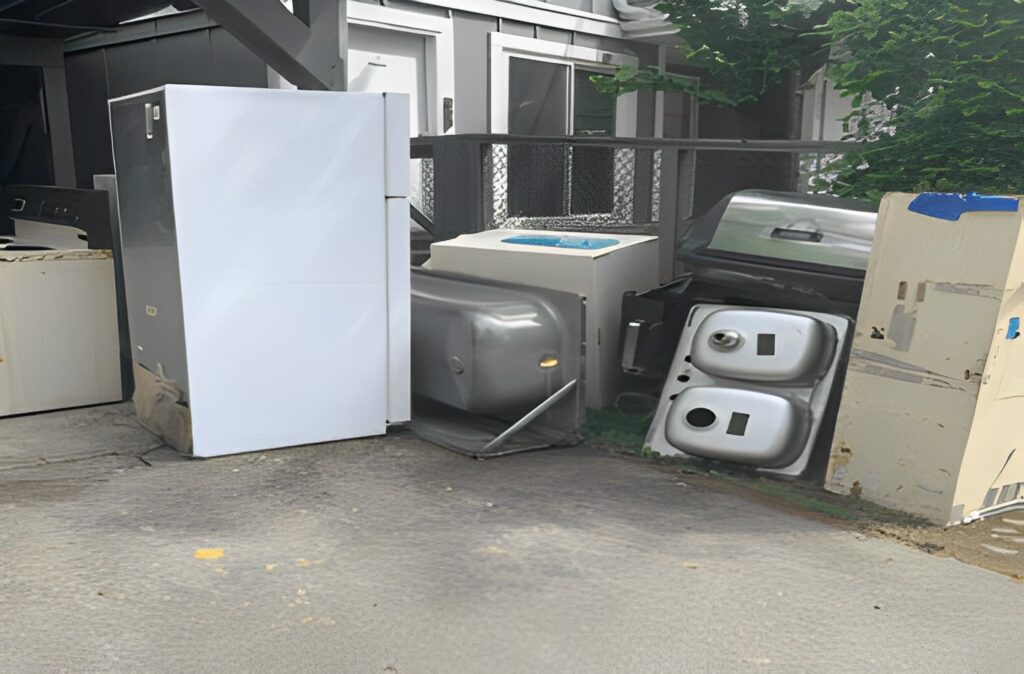
That old refrigerator finally gave out. The washing machine started making sounds no appliance should make. You called a junk hauler, they showed up, and the old units disappeared. End of story, right? Not quite.
Ever wonder what happens to appliances you get rid of? Most people assume they end up in a landfill somewhere. But the journey your old fridge or dishwasher takes after it leaves your house is more involved than you’d think. There’s sorting, dismantling, recycling, and sometimes even a second life for working units.
This guide walks through exactly what happens to your old appliances after removal. From the moment they’re picked up to the moment they become raw materials for something new.
Step 1: Appliance Pickup and Collection
It starts the way you expect. You call a junk hauler or schedule a pickup through your local waste service. A truck shows up. A crew hauls your old refrigerator, washer, or stove out of your basement, garage, or kitchen. They load it up and drive away.
But the process is more deliberate than it looks. Appliance pickup services don’t just toss things in the back of a truck. They’re trained to handle heavy, awkward loads safely, protecting your floors, doorways, and walls in the process. They also sort as they go, separating appliances from general junk so they can be processed correctly later.
Removal of appliance starts with the physical act of getting it out of your home, but that’s just the first step. The real work begins once the truck is full and headed to the next stop. What happens next depends on where the crew takes it.
Step 2: Transportation to Processing or Recycling Facilities
Once your old appliance leaves your property, it doesn’t go straight to a landfill. Most reputable haulers take collected items to specialized facilities designed to handle them properly.
These facilities vary by location and capability. Some focus on recycling metals and plastics. Others specialize in the tricky work of removing hazardous components like refrigerants. The best ones are certified to handle the full range of materials found in modern appliances.
Where do old appliances go after removal depends entirely on the company you hire and the facilities they partner with. A professional appliance removal and disposal service will have established relationships with local recyclers and processing centers. They know which facility handles refrigerators, which one takes electronics, and where to send working units for refurbishment.
Step 3: Initial Sorting and Inspection
When appliances arrive at a processing facility, the first stop is the sorting area. Workers and automated systems categorize each unit based on what it is, what condition it’s in, and what needs to happen next.
The biggest question at this stage is whether the appliance still works. A refrigerator that’s only a few years old might be salvageable. A washing machine with a blown motor is destined for recycling. Appliance disposal decisions start here.
Working units get set aside for a different path. They might be cleaned, tested, and sold to secondhand stores or donated to families in need. Some facilities partner with charities that refurbish appliances for low-income housing programs.
Old appliance removal doesn’t end with just taking things away. Responsible facilities make decisions about each unit based on its condition. That’s how good haulers ensure the maximum amount of material gets reused instead of wasted.
Step 4: Hazardous Material Removal
This is where the process gets serious. Old appliances contain materials that can’t just be tossed in a landfill. Refrigerators and air conditioners have refrigerants that damage the ozone layer if released. Older units may have mercury switches, PCB capacitors, or other toxic components.
Certified technicians handle this stage. They extract refrigerants using specialized equipment that captures the gas instead of venting it into the atmosphere. They remove oils, mercury, and other hazardous substances for safe disposal or recycling.
Do removal companies throw appliances away without doing this? The ones that cut corners do. But responsible haulers follow strict regulations. In fact, federal law prohibits releasing refrigerants into the air. Any company that takes your old fridge is required by law to handle these materials properly.
Appliance disposal methods explained always include this step. Without it, the appliance can’t be safely recycled. And without proper hazardous material removal, what should be an environmentally friendly process becomes an environmental hazard.
Step 5: Dismantling and Material Separation
With hazardous materials safely removed, the appliance is ready to come apart. This is where the recycling process really takes shape.
Workers and specialized equipment break the appliance down into its core components. Steel, aluminum, copper, plastic, glass, and electronic circuit boards all get separated. The goal is to isolate each material so it can be processed for reuse.
Removal appliances like refrigerators might yield hundreds of pounds of steel. Washing machines have copper motors and wiring. Microwaves contain circuit boards with trace amounts of gold and silver. Each material goes to a different stream.
Appliance recycling facilities use magnets to pull out ferrous metals. Shredders break down large components into smaller pieces. Conveyor belts and sorting lines separate materials by type. It’s a highly efficient system designed to recover as much as possible.
Step 6: Recycling and Material Recovery
This is where the separated materials become something new. The metals, plastics, and glass that came out of your old appliance are processed into raw materials that manufacturers can use.
Steel gets shredded, melted down, and formed into new steel products. That could be another appliance, a car part, or construction materials. Aluminum, copper, and other non-ferrous metals follow similar paths. Appliance recycling turns what was once waste into valuable resources.
Plastics are ground into flakes, cleaned, and melted into pellets that become new plastic products. Glass is crushed and used in construction or turned into new glass items. Circuit boards are sent to specialized facilities where precious metals like gold, silver, and copper are extracted.
What happens to your old appliances after removal is actually the start of their next life. The materials that made up your broken washing machine or retired refrigerator end up in everything from park benches to new electronics. Nothing goes to waste if it can be recovered.
Step 7: Refurbishment, Donation, or Resale
Not every appliance that gets picked up is destined for the shredder. Some still have life left in them.
When a unit arrives at a processing facility and passes inspection, it gets diverted to a different path. Technicians test it, clean it, make minor repairs if needed, and prepare it for a second home. Appliance junk removal services often partner with local charities or resellers who take working units.
Refurbished appliances end up in housing programs, thrift stores, or sold to families who need an affordable option. A refrigerator that was perfectly good but didn’t match your new kitchen can serve someone else for years. A washing machine that just needed a belt becomes a bargain for a family on a tight budget.
Which junk removal companies offer eco-friendly appliance pickup is something to ask about when you schedule service. The best ones prioritize reuse over recycling, and recycling over landfilling. They know that the most sustainable outcome for a working appliance is keeping it in use.
Step 8: Final Disposal of Non-Recyclable Materials
Even with the best recycling processes, a small amount of material still ends up where you hope it wouldn’t. Complex plastics, insulation foam, and some composite materials can’t be processed economically. Those leftovers go to the landfill.
The question are old appliances taken to landfills is fair. And the honest answer is that a small percentage of every appliance does end up there. But for responsible haulers and recycling facilities, that number is kept as low as possible. The steel, copper, aluminum, and most plastics are recovered. The hazardous materials are removed and handled safely.
What happens to appliances & electronics after junk removal? It isn’t a simple yes or no about landfilling. It’s a nuanced process where good companies recover 90 percent or more of what they collect.
Removable appliance parts that can be recycled go into the material stream. What can’t be recycled is disposed of in compliance with environmental regulations. That’s how responsible disposal works.
Conclusion
Your old appliance goes on a journey after it leaves your home. It gets sorted, inspected, and stripped of hazardous materials. Working units are refurbished and donated. Metals, plastics, and glass are separated and recycled into new products. What can’t be recovered goes to the landfill, but responsible haulers keep that number small. The process is complex, but it’s designed to recover as much as possible.
If you’re ready to get rid of an old appliance and want it handled responsibly, EJ Haul can help. We provide professional Appliance Removal Services that sort and dispose of your appliances the right way, donating whenever possible to reduce landfill impact and make sure every unit gets put to good use. Call us at 1 855 722 5535 or visit https://ejhaul86.com/appliance-removal/ to learn more.
Frequently Asked Questions
They’re collected, transported to a facility, sorted, and either refurbished, recycled into raw materials, or partially disposed of if not recoverable.
They go through inspection, hazardous material removal, dismantling, and material recovery, with usable units often reused or donated.
They are processed at specialized facilities where components are separated, valuable materials are extracted, and recyclable parts are reused.
No, reputable companies follow regulated appliance disposal methods that prioritize recycling, reuse, and environmentally safe handling.
Only a small portion of non-recyclable materials ends up in landfills; most appliances are recycled or repurposed before final disposal.